FSCJ Training & Organizational Development Website

Project Details

Organization

Florida State College at Jacksonville

Category

Web & CMS Consulting

Date

2016 to Present

Website

A Digital Environment Built to Evolve

Created from the ground up in 2016, the FSCJ Training & Organizational Development website has evolved into a digital environment supporting professional development, learning, communication, and organizational capability across a diverse institutional audience.

The work has been guided through three major iterations, integrating information architecture, knowledge and content organization, user experience, visual design, CMS implementation, accessibility, and governance.

Today, RocketCruzer provides strategic management and stewardship of the environment, ensuring it remains useful, sustainable, and responsive to changing organizational needs.
The Work

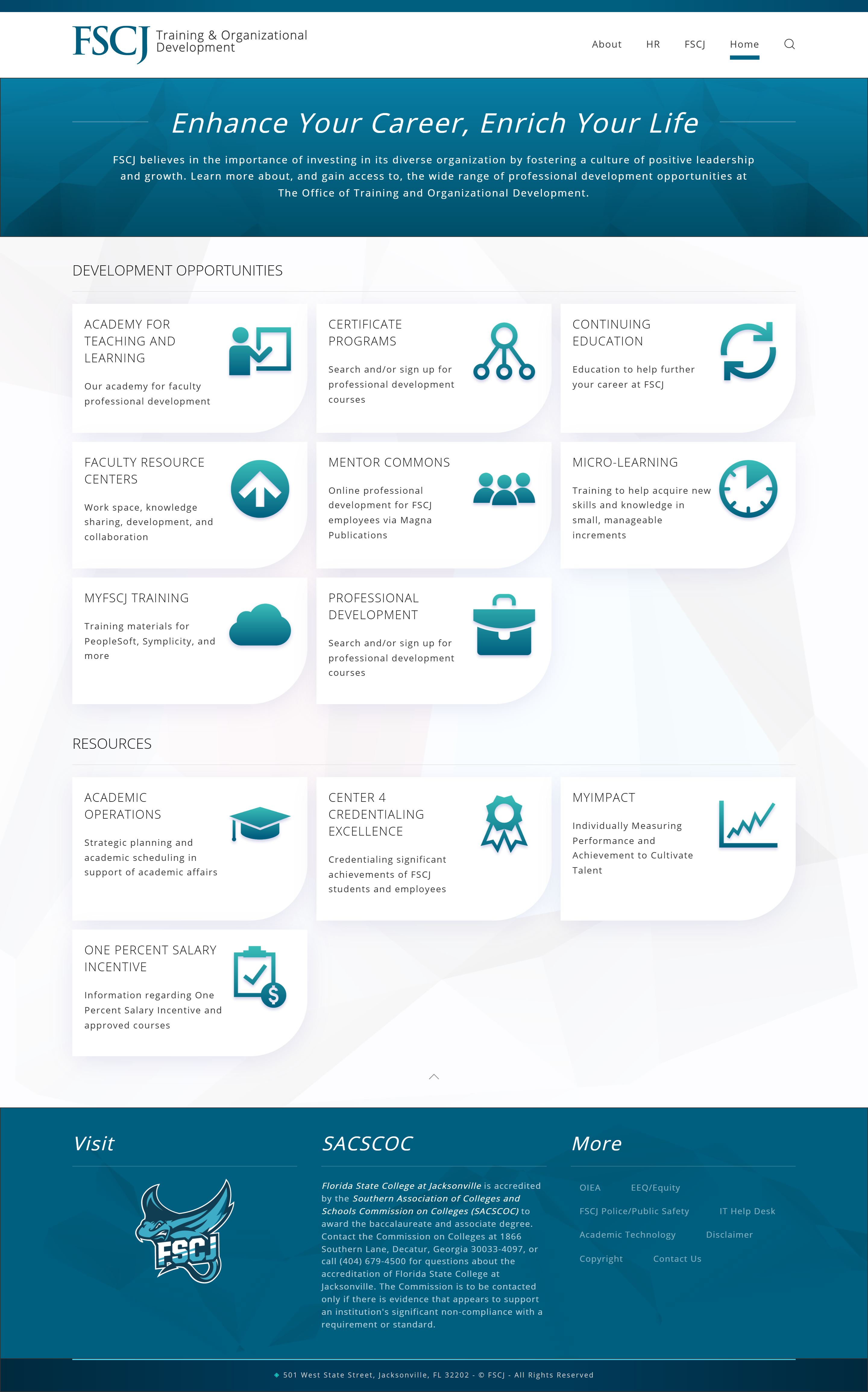
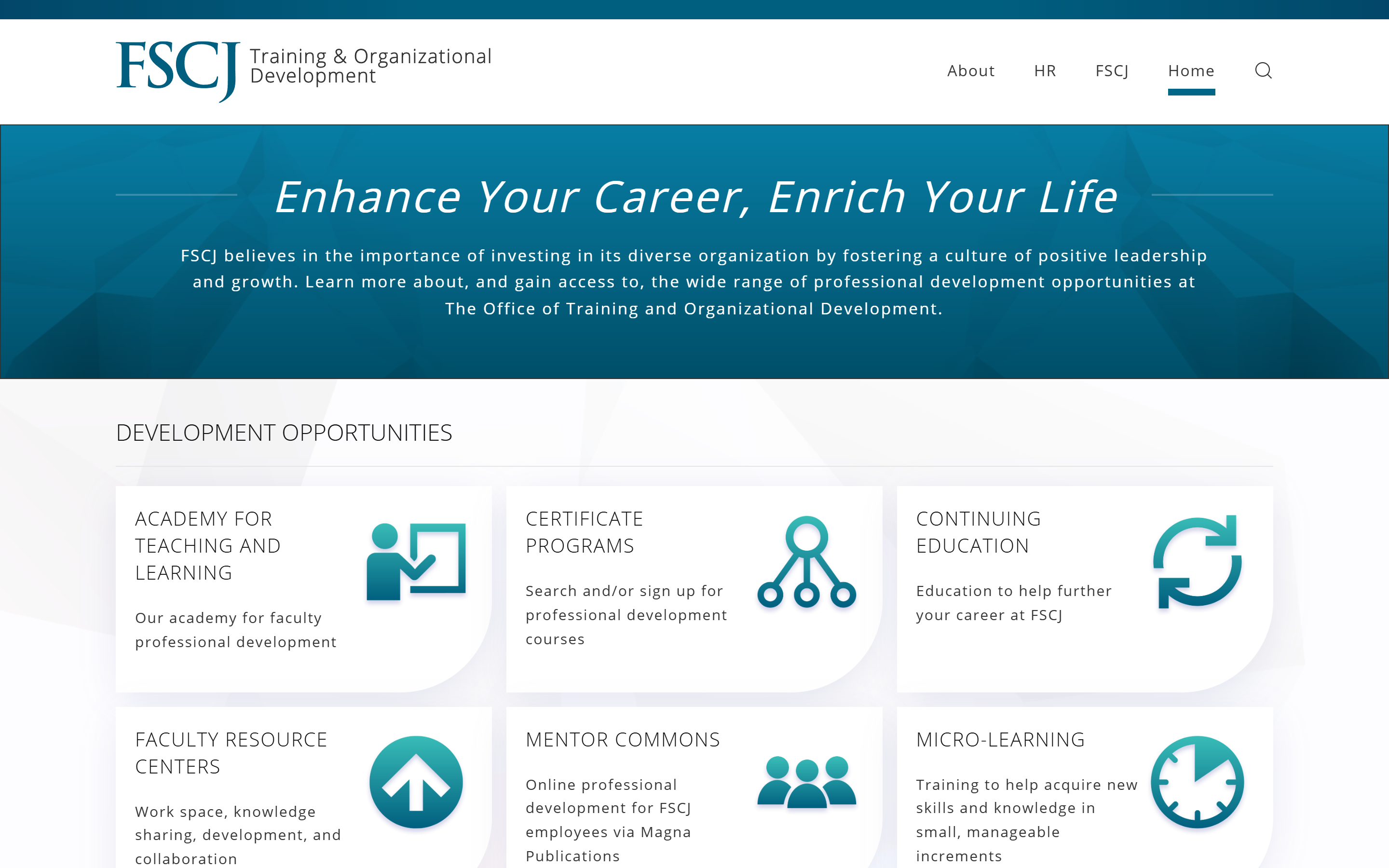
Homepage Full-Page

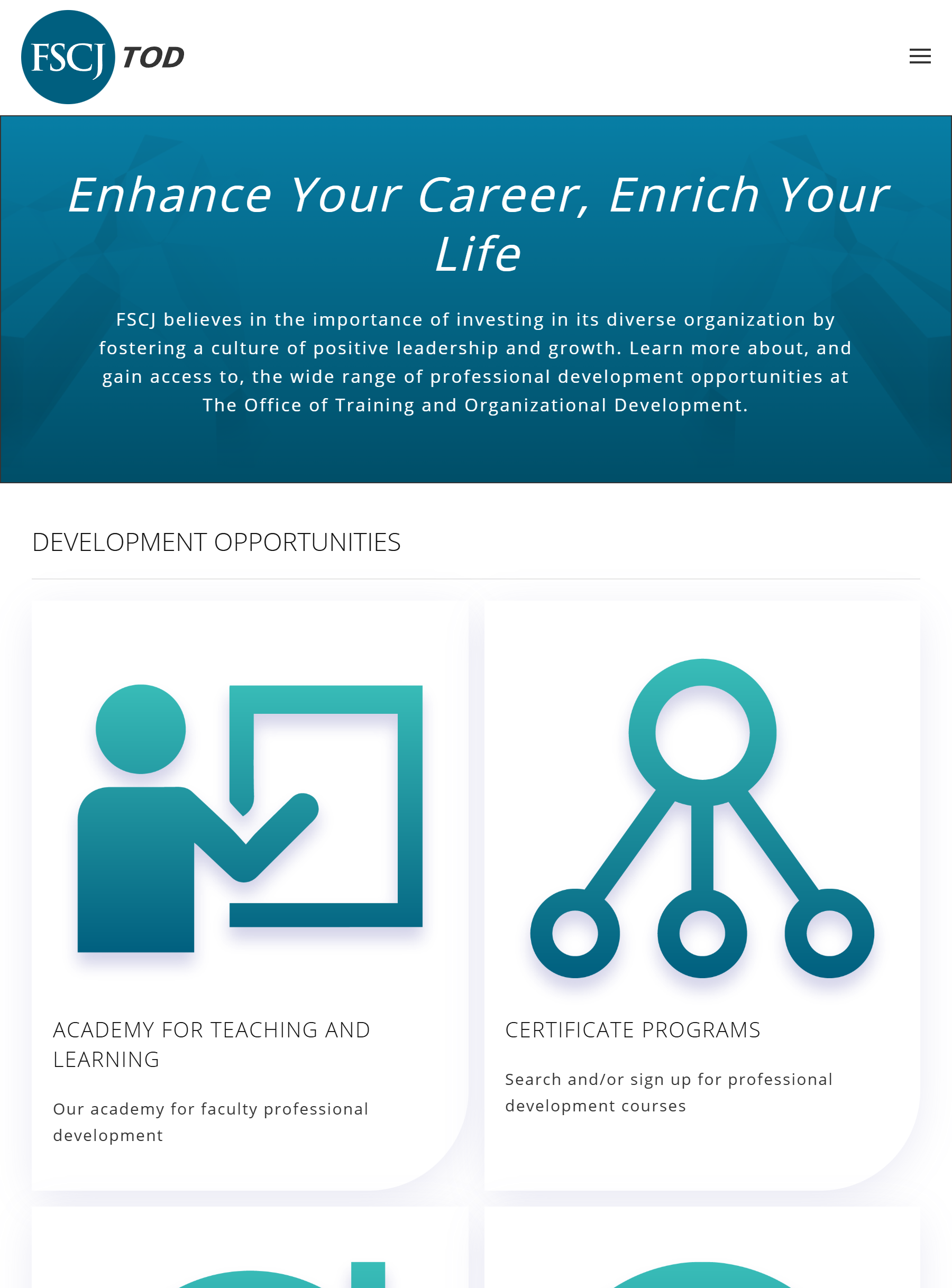
Homepage Mobile View

Homepage Mobile View

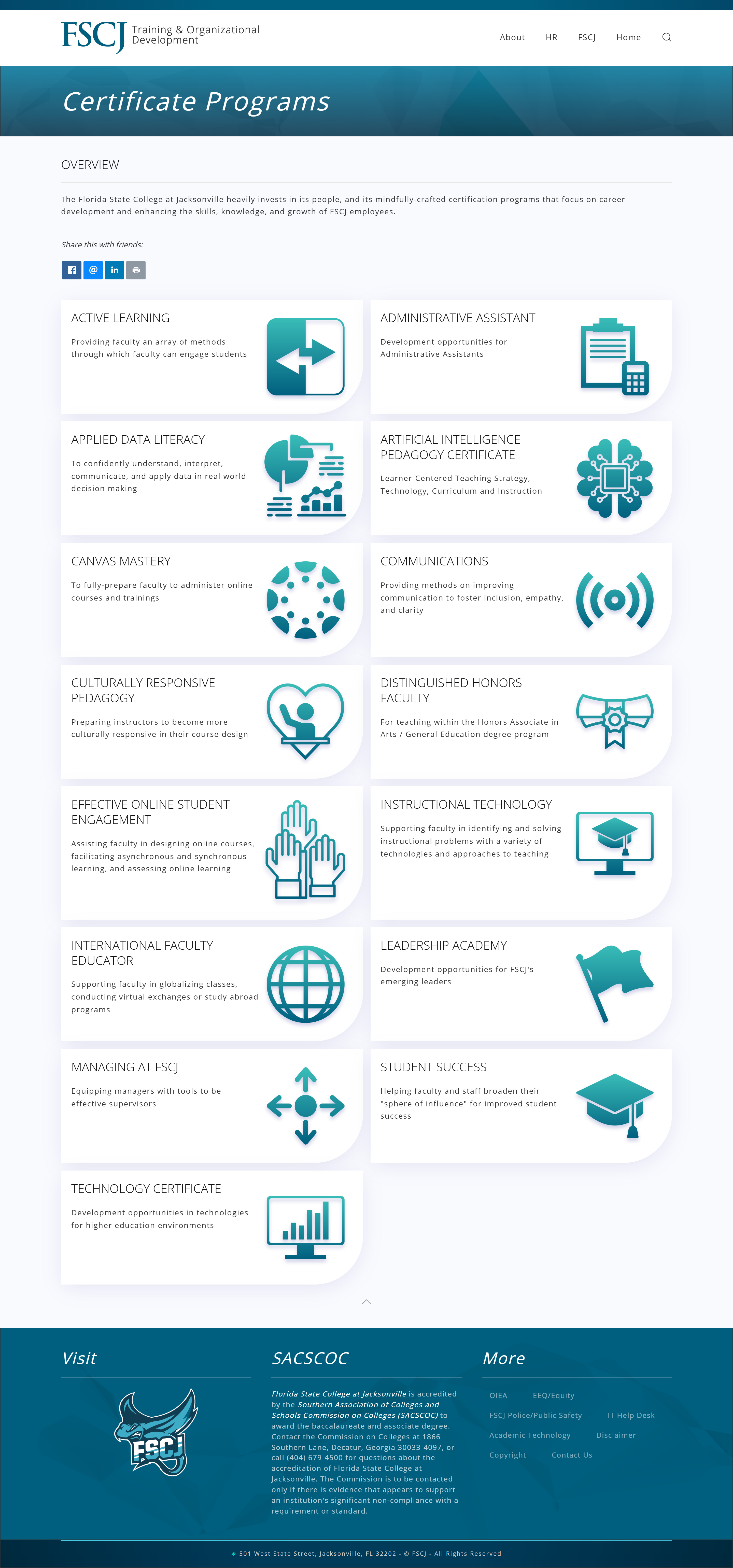
Certificate Programs

Certificate Programs

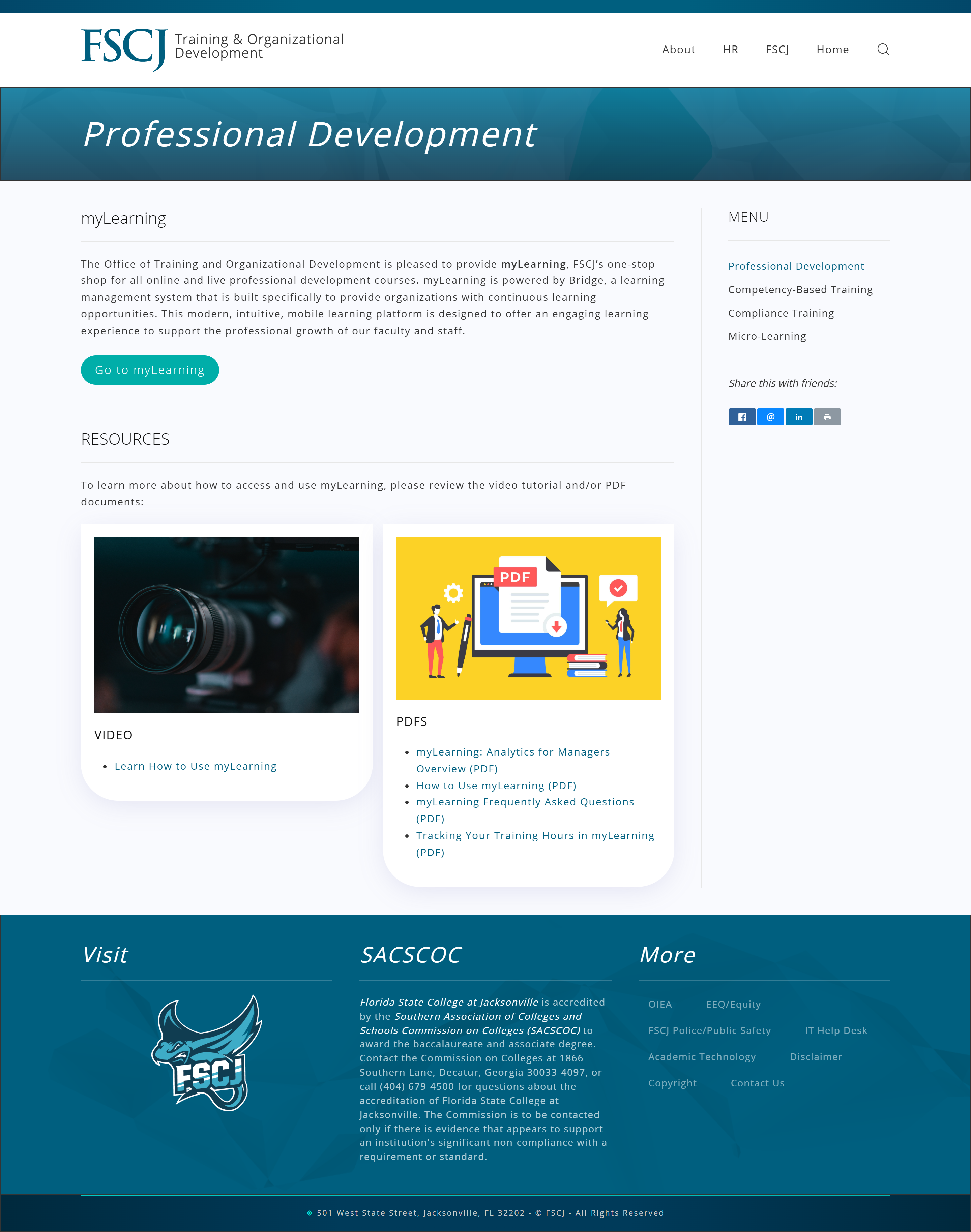
Professional Development

Professional Development

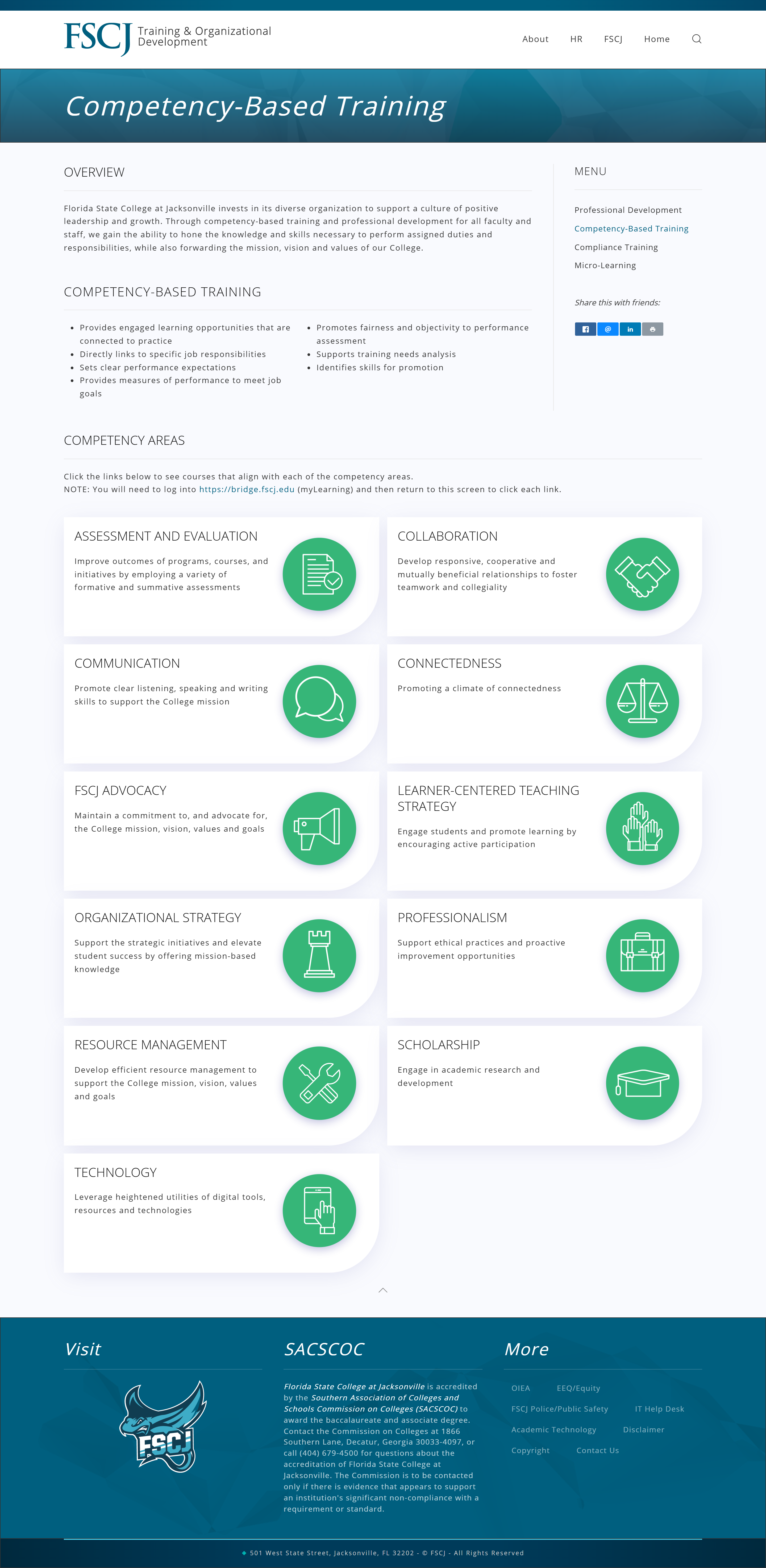
Competency-Based Training

Competency-Based Training

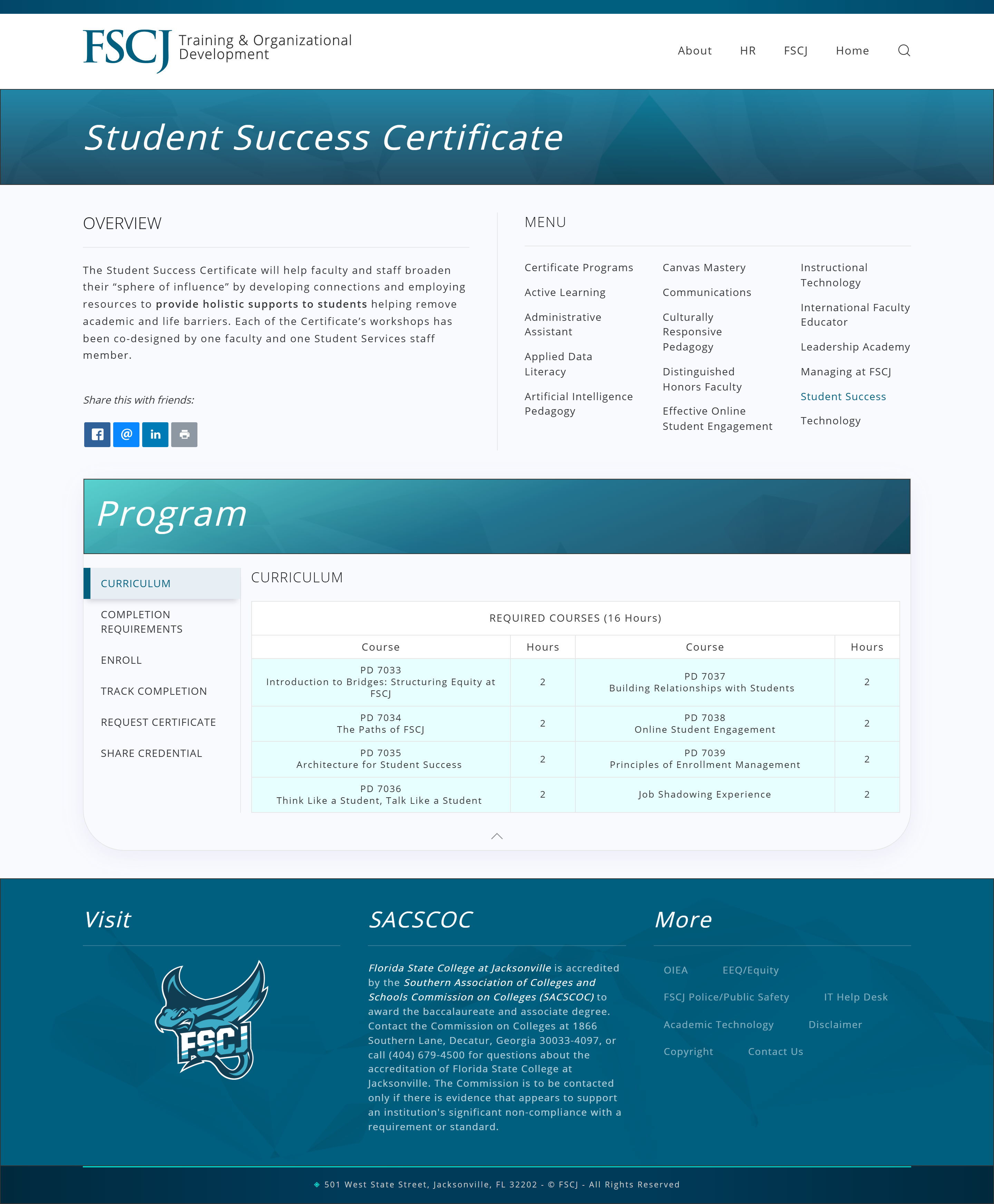
Program Detail

Program Detail


The Challenge

Transforming an Underperforming Digital Environment

The existing Training & Organizational Development website had become difficult to navigate, maintain, and evolve. Its information architecture and user experience made content difficult to discover, the technology was outdated, and the visual experience did not reflect the institution's brand. At the same time, learning resources, programs, procedures, communications, and organizational information continued to grow.

The challenge was to transform the site from a collection of information into a sustainable digital environment—one that could serve diverse audiences, connect related resources, support learning and communication, and give the organization greater control over its own content.

01

Rebuild Findability
Users needed clearer pathways to training, programs, resources, procedures, and organizational knowledge.

02

Connect the Pieces
Programs, learning pathways, resources, communications, knowledge and information needed to work together rather than exist as isolated pieces.

03

Design for Growth
New programs, resources, initiatives, and communications were continually being added, requiring flexible structures that could grow without sacrificing consistency or usability.

04

Empower the Organization
Interdepartmental users needed practical ways to publish and maintain their own information and files while working within an increasingly governed digital environment.

The Planning

Strategic Planning

The planning process brought together information architecture, knowledge and content organization, user experience, technology, and governance to establish a digital environment that could serve diverse audiences and evolve with the organization. The focus was not only on how the experience would look, but on how information would connect, how content could be managed, and how the environment could remain sustainable over time.

01

Information Architecture
Structure information, content, and organizational knowledge so people can find, understand, and navigate what they need.

02

Content & Page Systems
Establish repeatable structures for organizing, presenting, maintaining, and connecting content and knowledge across the environment.

03

User Experience
Develop intuitive pathways that help different audiences discover relevant information and take action.

04

Governance & Sustainability
Establish publishing practices, content ownership, file-management approaches, and administrative processes that allow the environment to evolve.

The Solution

A Cohesive Digital Environment for Learning and Organizational Development

The solution transformed the website from a collection of information into a cohesive digital environment for learning, knowledge sharing, communication, and organizational development. The work brought together user experience, information architecture, content systems, visual design, CMS implementation, accessibility, and governance—creating a flexible environment that could evolve with the organization while enabling distributed teams to manage and publish their own content.

The Evidence

Evidence of Use and Evolution

Digital environments create value in different ways, from improving how people find and engage with information to enabling more sustainable ways of working. The measures below offer a selected snapshot of website use during 2025–26, illustrating the reach and continued use of the Training & Organizational Development environment.

01

Website Users

9,705   (2025-2026)

A Snapshot: 3-Year Comparison

2023–2024 1,232
2024–2025 6,839
2025–2026 9,705

02

Page Views

37,171   (2025-2026)

A Snapshot: 3-Year Comparison

2023–2024 6,198
2024–2025 38,004
2025–2026 37,171

03

Major Website
Iterations

3   (2016-present)

A Sustained Digital Environment

Iteration 01 2016
Iteration 02 2020
Iteration 03 2024

04

Core Learning & Resource Areas

12   (2025-2026)

A Connected Learning Environment

2016 7
2020 10
2024 12

More Selected Work

Coming Soon

Additional learning, credentialing, and organizational-development work is being curated.

Coming Soon

Additional learning, credentialing, and organizational-development work is being curated.